What counts as an emergency heating repair?
A heating problem is an emergency when it puts people or the house at risk. That means a gas smell, a carbon monoxide alarm, a burning or electrical smell from the equipment, water pouring from a boiler, or no heat at all when it's below freezing outside.
Gas smells and CO alarms come first, and they aren't a repair call. Leave the house, don't flip switches or start a car in an attached garage, and call the gas utility's emergency line or 911 from outside. Have the heating system looked at only after the utility or fire department says the house is safe.
No heat on a mild fall day is usually something that can wait for regular hours. No heat on a January night in the teens is different. A house loses heat fast, and in older homes with plumbing in outside walls the pipes are the next thing at risk. Infants, older people and anyone with a health condition also make a cold house more urgent.
This is the kind of call Wayne Refrigeration Air & Heat handles. We're a heating and cooling company in North Arlington, NJ, working under New Jersey Master HVACR License #19HC00868800, and we take emergency calls 24/7 across southern Bergen County and nearby towns in Passaic and Essex counties.
What to check before you call for emergency heating repair
A lot of no-heat calls come down to something simple: a thermostat setting, a tripped breaker, a switch that got bumped, or a clogged filter. Check these first. It takes a few minutes and might get the heat back on right away.
Thermostat: make sure it's set to Heat, set a few degrees above room temperature, and that the screen isn't blank. A blank or flickering screen usually means dead batteries.
Power: find the breaker for the furnace or boiler and see if it has tripped. Then look for the service switch near the equipment, which looks like a regular light switch and often gets flipped off by mistake. On a furnace, make sure the front panel is fully seated, because a safety switch behind it keeps the unit from running when the panel is loose.
Filter: a badly clogged filter can make a furnace overheat and shut itself off. If yours is gray and caked, swap it out and give the system a few minutes to reset.
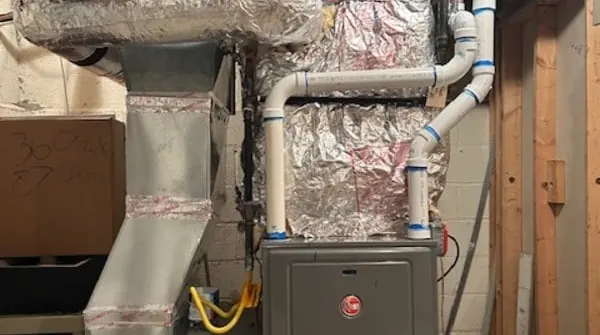
High-efficiency furnaces: these vent through white PVC pipes on the side or roof of the house. After snow or a hard freeze, check that the pipe outside isn't blocked by snow or ice. Many of these furnaces also shut down when their condensate drain or pump backs up, so look for water around the base.
Boilers: on a hot water boiler, the pressure gauge usually reads somewhere around 12 to 15 psi when it's cold. On a steam boiler, the sight glass should show water about halfway up. If the pressure or water level is way off, call for service. Don't try to refill an empty, hot boiler.
One caution on reset buttons: pressing a reset button once is fine. If the system locks out again, stop there. Hitting reset over and over can flood the burner with fuel or hide a real safety problem.
How to stay warm and protect your home while you wait
Close off rooms you aren't using, keep everyone in one or two rooms, and use space heaters only the safe way. Never heat the house with an oven, a gas range, a grill or a generator. Those are a common cause of carbon monoxide poisoning during winter outages.
Plug space heaters straight into a wall outlet, not an extension cord or power strip, and keep anything that can burn at least three feet away. Turn them off when you leave the room or go to sleep.
To protect the pipes, open the cabinet doors under kitchen and bathroom sinks, especially on outside walls, and let a pencil-thin trickle run from faucets on the coldest walls. Keep the garage door shut if pipes run through the garage.
If a boiler is leaking or making loud banging, hissing or rumbling sounds, turn it off at the service switch and wait for a technician instead of letting it keep running.
Common causes of no heat in North Jersey homes
Most emergency no-heat calls trace back to a small number of parts. On furnaces it's usually the igniter, the flame sensor, the inducer motor, a pressure or limit switch, or a control board. On boilers it's usually the circulator pump, the low water cutoff, the burner or ignition controls, or the thermostat wiring.
The housing stock in this area shapes what breaks. Many older homes in towns like Lyndhurst, Rutherford, Nutley and Belleville still run on hot water or steam boilers feeding cast iron radiators. Those boilers can last a long time, but the pumps, valves, expansion tanks and controls around them wear out on their own schedule. Two-family homes, which are common here, often have two systems in one basement, and it's easy to mix up which thermostat and switch go with which unit.
Many forced-air furnaces put in during the 1990s and 2000s are now reaching the end of their typical service life, so parts failures show up more often. High-efficiency furnaces bring their own winter problems: frozen condensate lines and vent pipes blocked by snow or ice during a cold snap.
Failures tend to cluster on the first truly cold nights of the season, when a system that sat idle all summer suddenly has to run nonstop. A worn part that was holding on in October is often the one that quits in January.
Repair or replace after an emergency breakdown?
If the system is fairly young and one part failed, repairing it is almost always the right call. Replacement starts to make more sense when the furnace is past about 15 to 20 years old, the boiler has a cracked section or leaking heat exchanger, or the repair is a major one on equipment that's already been needing frequent fixes.
Typical lifespans give you a starting point. Gas furnaces usually run about 15 to 20 years. Cast iron boilers often go 20 to 30 years or more, while some newer high-efficiency boilers come in shorter, depending on water quality and upkeep. A cracked furnace heat exchanger is a safety problem, not just a wear problem, because it can let combustion gases into the airflow. When that's the diagnosis, replacement is usually the answer.
A common rule of thumb: if the repair costs close to half of what a new system would, and the equipment is in the back third of its expected life, get a replacement quote before you decide.
You don't have to decide in the middle of the night. Often a technician can get an older system safely running again so the house stays warm, and you can weigh replacement in daylight with real options in front of you. If the equipment isn't safe to run, it should stay off, and the next step is a replacement plan.
How to avoid needing emergency heating repair
A yearly professional tune-up before heating season, plus regular filter changes, prevents a large share of mid-winter breakdowns. For most homes that means a maintenance visit every fall for the heating side and every spring for the cooling side, with filters checked monthly and changed every one to three months.
A good heating maintenance visit usually covers: inspecting and cleaning the burner, testing the igniter and flame sensor, checking the heat exchanger for cracks or rust, testing safety switches and limit controls, checking the flue and venting, measuring gas pressure and combustion where appropriate, clearing the condensate drain on high-efficiency units, and checking thermostat operation. Boiler visits add the pressure and expansion tank, the circulator, relief valve, the low water cutoff, and on steam systems the water level and sight glass.
On your own, you can keep the area around the furnace or boiler clear, keep outdoor vent pipes free of snow and leaves, test your carbon monoxide and smoke alarms, and pay attention to new noises, short cycling or rooms that won't heat evenly. Those are often early warnings of the part that will fail first.
Late October and early November, before the first long cold stretch, is the ideal time to have the heating system checked here in North Jersey.
Questions we hear
Can I get heating repair at night or on the weekend?
Yes. Many heating companies take after-hours emergency calls. Wayne Refrigeration Air & Heat's emergency hours are 24/7, with regular hours Monday to Friday 8 AM to 8 PM and weekends by appointment. If the problem can safely wait, booking during regular hours is usually simpler.
Is no heat an emergency?
It depends on the weather and who's home. No heat when it's below freezing, or with an infant, an older person or someone sick in the house, should be treated as an emergency. On a mild day in a healthy household it can usually wait for a regular appointment, as long as the house stays well above freezing.
How cold can a house get before pipes freeze?
Keep the house at 55°F or warmer to be safe. Pipes in exterior walls, crawl spaces and unheated garages can freeze well before the middle of the house feels that cold, especially when it's in the teens or below outside. Open sink cabinets and let faucets drip on the coldest walls until the heat is back.
What should be on an HVAC maintenance checklist?
For heating: replace or check the filter, inspect and clean the burner, test the igniter, flame sensor and safety controls, inspect the heat exchanger and venting, clear the condensate drain, and check the thermostat. Boilers also need the pressure, expansion tank, circulator, relief valve and low water cutoff checked. For cooling: clean the outdoor coil, check refrigerant performance and electrical parts, and clear the condensate line.
How often should an HVAC system be maintained?
Most homes do well with one professional visit a year for each side of the system, so heating in the fall and cooling in the spring. Filters should be checked monthly and usually changed every one to three months, more often with pets or ongoing construction dust. Older equipment and boilers in hard-working multi-family homes benefit from staying strictly on that yearly schedule.
Is an HVAC maintenance plan worth it?
A maintenance plan or agreement is mainly a way to make sure the yearly tune-ups actually happen, often with scheduled reminders built in. It's usually worth it if you tend to forget maintenance or have older equipment. Before signing one, read exactly which visits, parts and priority terms it includes, and what it leaves out.