When should I call for HVAC repair?
Call as soon as the system stops heating or cooling, short-cycles, makes grinding or banging noises, or blows weak air. Small symptoms often point to a part that is wearing out, and running the system through it can turn a minor fix into a bigger one.
Other signs worth a call: a furnace that will not stay lit, an AC running constantly without cooling the house, ice on refrigerant lines, water pooling near the indoor unit, a burning smell, or a sudden jump in your energy bills.
What are the most common furnace problems in a New Jersey winter?
With cold winters, furnaces here run hard from November through March. The usual culprits are a dirty or clogged filter, a faulty igniter or flame sensor, a failing thermostat, a worn blower motor, and airflow restrictions from blocked vents.
A clogged filter is the easiest to check yourself: replace it if it looks gray and packed, typically every one to three months during heating season. If the furnace still will not run, check that the thermostat is set to heat and the batteries are fresh before calling. Never open the gas or burner compartment yourself.
What are the most common AC problems in the summer?
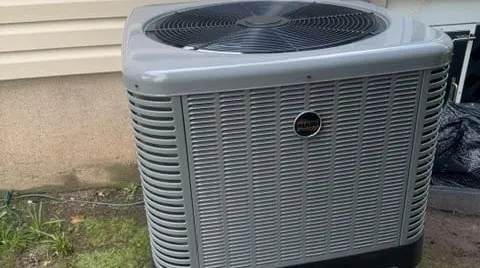
Humid New Jersey summers put heavy demand on central air. Frequent issues include a failed capacitor or contactor, a dirty condenser coil, low refrigerant from a leak, a frozen evaporator coil, and a clogged condensate drain.
If the outdoor unit hums but the fan will not spin, a capacitor is often the cause. Low refrigerant is never simply topped off for good: the leak has to be found, because refrigerant does not get used up. Keeping the outdoor unit clear of leaves and debris helps prevent many of these calls.
What happens during an HVAC repair visit?
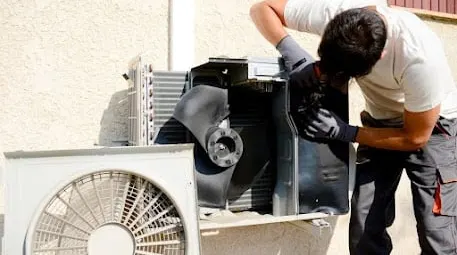
A technician will ask about the symptoms, check the thermostat, filter, electrical connections, and airflow, then test the components involved to find the actual fault. After diagnosis you should be told what is wrong, what the repair involves, and the options.
Simple parts are often replaced the same visit if the technician has them on the truck. Specialty or older parts may need to be ordered, which can add a day or more. Having the system's age, model, and a description of when the problem started ready speeds things up.
Should I repair or replace my HVAC system?
Repair usually makes sense when the system is under roughly 10 to 12 years old and the problem is a single part. Replacement becomes worth considering when a furnace or AC is 15 years or older, needs repeated repairs, has a major failure like a cracked heat exchanger or failed compressor, or costs far more to run than newer high-efficiency models.
A common rule of thumb is to weigh the repair cost against the remaining life of the unit. If a repair is a large share of the cost of a new system, replacement is often the better long-term move. Ask for both options so you can compare.
How can I reduce the chance of needing repairs?
Regular maintenance is the most reliable way. Have heating checked in the fall and cooling in the spring, change filters on schedule, keep vents and the outdoor unit clear, and pay attention to new noises or smells.
A tune-up catches worn parts, dirty coils, and loose connections before they fail on the hottest or coldest day, when repair schedules tend to be busiest.
Questions we hear
How do I know if my furnace needs repair or just a new filter?
If airflow is weak or the furnace runs but heats poorly, check the filter first. If a fresh filter and correct thermostat settings do not help, or the furnace shuts off, will not ignite, or makes unusual noises, it needs a technician.
Why is my AC running but not cooling?
Common causes are a dirty filter, a frozen evaporator coil, a dirty condenser, low refrigerant, or a failed compressor or capacitor. Turn the system off if you see ice, let it thaw, and call for a diagnosis.
How long does an HVAC repair take?
Many repairs take one to a few hours once the problem is diagnosed. If a part has to be ordered, the job may be finished on a second visit.
Does Wayne Refrigeration Air and Heat repair both heating and cooling?
Yes. We repair furnaces and heating systems as well as central air conditioners, and serve towns across Bergen, Passaic, and Essex counties. We are open every day from 7 AM to 8 PM.
Can I fix HVAC problems myself?
Basic tasks like replacing the filter, checking the thermostat, clearing debris from the outdoor unit, and making sure vents are open are safe for homeowners. Anything involving gas, refrigerant, or electrical components should be left to a technician.