What does an AC condenser do, and what usually breaks?
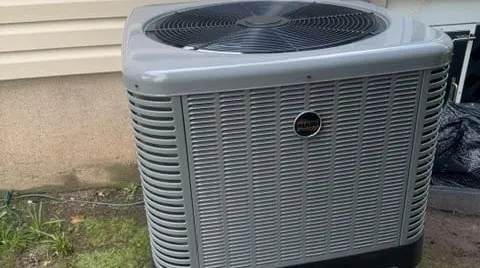
The condenser is the outdoor unit of a central air system. It releases the heat pulled out of your house, using a compressor, a coil, and a fan.
The parts that fail most often are the run capacitor, the contactor (an electrical switch), and the fan motor. These are common, relatively small repairs. Less often you will see a refrigerant leak, a damaged coil, or a failed compressor, which is the costliest component.
How do I know my condenser needs repair?
Common signs are an outdoor unit that does not start, a fan that does not spin, a humming or clicking noise, warm air from the vents, ice on the refrigerant lines, or a breaker that keeps tripping.
If the fan is running but the air inside is warm, or the unit hums but will not start, a capacitor or compressor problem is likely. These are not good guesses to test yourself, because capacitors can hold a charge after power is off.
What can I check before calling for AC condenser repair?
Start with the thermostat: set to cool, with a temperature below the room reading. Check the breaker and the outdoor disconnect box near the unit. Make sure the indoor air filter is not clogged, since a blocked filter can cause freezing and shutdowns.
Look at the outdoor unit for leaves, grass clippings, or debris against the coil, and keep about two feet of clearance around it. Rinsing the coil gently with a garden hose, with the power off, can help. Beyond that, electrical and refrigerant work should be left to a technician.
Should I repair or replace a failing condenser?
A common rule of thumb is that a unit over roughly 12 to 15 years old, using older refrigerant, or needing a major part like a compressor is a candidate for replacement. A newer unit with a failed capacitor or fan motor is almost always worth repairing.
Consider the repair cost against the price of a new system, how often the unit has needed service, and how well it keeps the house comfortable. Older systems that use R-22 refrigerant are costly to recharge because that refrigerant has been phased out.
How long does an AC condenser repair take?
Simple fixes like a capacitor or contactor are often done in one visit, usually within an hour or two once the technician has the part. Fan motors and coil work can take longer, and a compressor or special-order part may need a second visit.
Cleaning and a seasonal checkup can head off many of these failures. In the Northeast, the best time to have the outdoor unit looked at is in spring before the cooling season, and it is worth covering or clearing the unit of debris through the winter.
Questions we hear
Can I repair an AC condenser myself?
Cleaning debris from around the unit and rinsing the coil is fine for a homeowner. Replacing capacitors, contactors, or anything involving refrigerant is electrical or regulated work that should be done by a trained technician.
What is the most common AC condenser repair?
A failed run capacitor is one of the most common, followed by the contactor and the fan motor. These parts wear from heat and repeated starting.
Why is my AC condenser running but the house is not cooling?
Possible causes include low refrigerant from a leak, a dirty coil, a failing compressor, or a frozen indoor coil from poor airflow. A technician can measure pressures and temperatures to find which it is.
How long does an AC condenser last?
Typically around 12 to 15 years, sometimes longer with regular maintenance and a clean location. Heavy use, coastal or dirty air, and skipped service shorten that.
Should I run my AC if the condenser is making noise?
If you hear grinding, loud buzzing, or clanking, turn the system off and have it checked. Running it can turn a small repair into a damaged compressor.